Certification, CI and MRV Mechanics
This explainer sets out how Certification, Carbon Intensity (CI), and Monitoring, Reporting & Verification (MRV) actually work together in practice, and where most companies get exposed.
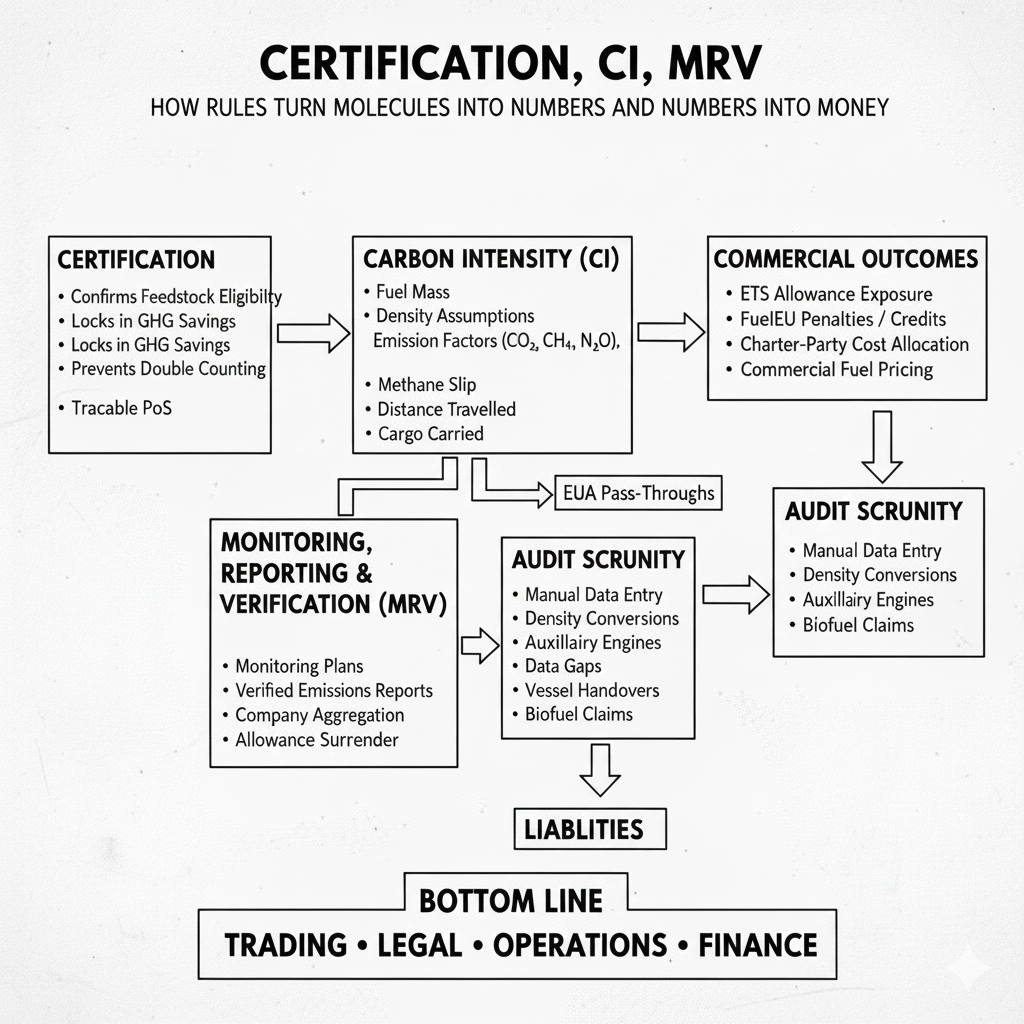
Certification: when “green” only counts if it’s recognised
Burning a low-carbon fuel is not enough. What matters is whether regulators recognise it.
Under EU rules, fuels are only treated as zero- or low-emission if they meet RED sustainability and GHG-saving criteria and are backed by an approved certification trail. No certificate, no benefit.
What certification really does:
Confirms feedstock eligibility
Locks in lifecycle GHG savings
Prevents double counting
Creates a traceable Proof of Sustainability (PoS)
This is why biofuels and biomethane are routinely rejected at audit stage. The molecule may be clean. The paperwork isn’t. Hard truth: certification is a gatekeeper to regulatory recognition.
2. CI: where small data errors become big money
CI looks technical. It isn’t. It’s math, and extremely sensitive math.
Carbon intensity outcomes are driven by a handful of high-leverage inputs:
Fuel mass, not volume
Density assumptions
Emission factors (CO₂, CH₄, N₂O)
Methane slip for LNG
Distance travelled
Cargo carried
Get any of these slightly wrong and your CI result shifts materially. That shift directly feeds:
ETS allowance exposure
FuelEU penalties or credits
Charter-party cost allocation
Commercial fuel pricing
Rule of thumb: Know the variables that move your CI the most.
3. MRV: the system that turns emissions into liabilities
MRV is where emissions become auditable obligations. The launch of EU ETS Maritime in Jan 2024, ships above 5,000 GT calling EU ports must operate a full annual compliance cycle:
Ship-specific Monitoring Plans
Verified Emissions Reports
Company-level aggregation
Allowance surrender against verified tonnes
The system is unforgiving:
Late or incorrect reporting triggers fines
Missing data defaults conservatively
Repeated non-compliance risks fleet-wide port bans
4. Where auditors actually focus (and where companies fail)
Auditors test completeness, consistency, and bias.
Expect scrutiny on:
Manual data entry points
Fuel density conversions
Auxiliary engines and boilers
Data gaps and surrogate assumptions
Mid-year vessel handovers
Biofuel zero-rating claims
If emissions occurred, they must appear somewhere in the verified trail. If your monitoring plan leaves discretion, auditors will test whether it creates bias.
5. The commercial evolution
These mechanics are not neutral. They are reshaping contracts.
Fuel is now sold with regulatory attributes
Charter parties are renegotiating EUA pass-throughs
Surcharges replace flat bunker pricing
Hedging strategies become operational necessities
Counterparty risk extends into carbon markets
This is why maritime decarbonisation now sits squarely between trading, legal, operations, and finance, not sustainability teams.
The Bottomline
The companies that win won’t be the ones with the loudest net-zero claims.
They’ll be the ones who understand how rules turn molecules into numbers, and numbers into money.
If you’re serious about operating, supplying, or investing in maritime fuels today, this isn’t optional knowledge anymore. It’s the operating system.
